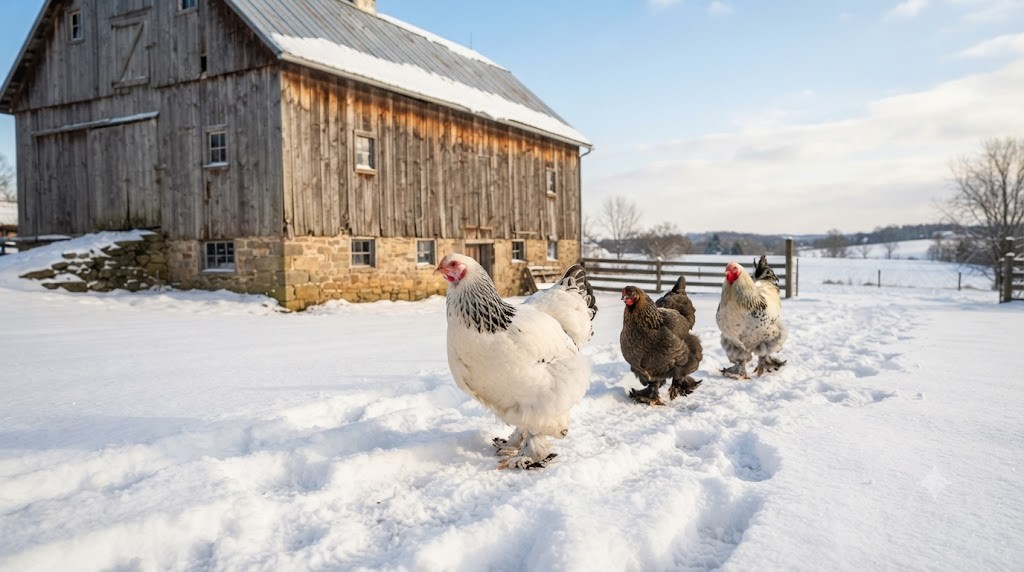
Beyond the high-throughput commercial barns of production agriculture lies the vibrant, historically rich realm of ornamental, rare, and exhibition poultry breeding. Known formally as the poultry fancy, this specialized sphere preserves extraordinary genetic mutations, morphological variations, and antique avian lineages that would otherwise face total extinction. From the silk-like feathering of ancient Asian Silkies to the dramatic crests of European Polish fowl and the prized chocolate eggshells of French Marans, ornamental breeds showcase the remarkable genetic plasticity of the domestic fowl (Gallus gallus domesticus).
Preserving these rare breeds is not merely an aesthetic pursuit; it represents vital agricultural conservation biology. Ornamental and landrace chickens maintain critical genetic diversity—including unique immune response alleles, metabolic adaptations, and behavioral instincts—that constitute an invaluable global genomic reservoir. As commercial poultry monocultures become increasingly homogeneous, conservation breeders safeguarding rare populations serve as crucial protectors of biodiversity.
🐔
Genetics & Morphology
Morphological Curiosities and Genetic Foundations
The extraordinary appearances of ornamental chickens result from specific genetic mutations that have been meticulously stabilized and refined over centuries of selective breeding.
The Silkie: Polydactyly, Fibromelanosis, and Hookless Plumage
The Silkie is among the most ancient and genetically unique breeds in existence, documented by explorer Marco Polo during his travels through thirteenth-century China. The breed exhibits three profound genetic anomalies operating simultaneously:
- Hookless Feathering (gene h): Unlike standard avian feathers that possess microscopic hooklets (barbicels) interlocking the barbs into a cohesive, aerodynamic vane, Silkie feathers completely lack functional barbicels. Consequently, their plumage resembles soft mammalian fur or down, rendering the birds entirely flightless and exceptionally vulnerable to wet weather.
- Fibromelanosis (Fm gene): The Silkie possesses a complex genetic duplication that drives hyper-pigmentation throughout its entire anatomy. Their skin, beak, comb, wattles, tongue, periosteum (bone covering), and internal muscular connective tissues are an intense, deep purplish-black, contrasted vividly by bright turquoise-blue earlobes.
- Polydactyly (Po gene): While standard chickens possess four toes per foot, Silkies exhibit a well-defined fifth toe originating from the medial aspect of the foot, complete with clear skeletal separation and independent claw formation.
The Polish (Padovana): Cerebral Protuberance and Crest Formation
The Polish chicken, renowned for its dramatic spherical crest of feathers that cascades over the head, originated in continental Europe, despite its common English name. The breed’s massive crest is directly tied to a hereditary skeletal anomaly known as a cerebral protuberance or cranial hernia (governed by the Crest gene, Cr).
In crested fowl, the frontal bones of the skull fail to fuse completely along the median sagittal suture, creating an elevated, perforated bony dome. A portion of the bird’s brain protrudes upward into this protective bony cavity. Feathers radiating from this cranial crest develop without the typical orientation, forming an extravagant feathered bouffant. However, because this crest severely restricts lateral and superior field of vision, Polish chickens are notoriously prone to startling and require protected aviary housing to shield them from aerial predators.
The French Marans: Extreme Eggshell Pigmentation Genetics
Originating around the marshy port town of Marans in southwestern France, the Marans chicken is internationally celebrated for laying the darkest brown eggs of any domestic fowl, often compared to dark chocolate or mahogany. This exceptional coloration is not integral to the calcified shell matrix itself; rather, it is applied as an intense layer of protoporphyrin pigment secreted by specialized epithelial cells lining the terminal portion of the oviduct during the final 90 to 120 minutes prior to oviposition.
The French Marans Club evaluates eggshell depth using an official 9-point color scale, with levels 4 through 9 representing genuine Marans dark eggs. Interestingly, the intensity of this protoporphyrin coating naturally wanes toward the middle and end of a hen’s seasonal laying cycle as pigment storage pools temporarily deplete, rejuvenating completely following the annual molt.
| Ornamental Breed | Geographic Origin | Distinctive Trait | Egg Production (Annual) | Eggshell Color | Special Husbandry Requirement |
|---|---|---|---|---|---|
| Silkie (Bearded / Non-Bearded) | China | Fur-like plumage, black skin, 5 toes | 100 – 120 | Cream / Tinted | Must be kept dry; cannot fly to roosts |
| Polish (Crested) | Netherlands / France | Massive feathered crest, cranial dome | 120 – 160 | Pristine White | Requires sheltered runs; trim crest for vision |
| Black Copper Marans | France | Mahogany/chocolate eggshell pigmentation | 150 – 180 | Dark Chocolate | Monitor shell pigment depth across cycle |
| Ameraucana | United States | Muffs, beard, blue eggshell genetics | 180 – 220 | True Sky Blue | Ensure true breed status (not Easter Egger) |
| Ayam Cemani | Indonesia | Complete internal/external fibromelanosis | 60 – 90 | Cream / Pale Tint | Climate-controlled winter housing |
| Sultan | Turkey | Vulture hocks, 5 toes, muffs, crest | 50 – 80 | White | Dry sawdust litter to preserve foot feathering |
🐔
Eggshell Genetics
The Science of Blue, Green, and Tinted Eggshells
One of the primary drivers of modern interest in rare and ornamental heritage breeds is the captivating diversity of eggshell coloration, exemplified by the Ameraucana, Araucana, and specialized olive-egger breeding programs.
The Oocyan Gene: Biliverdin Pigmentation
Unlike brown egg pigmentation—which is applied strictly to the outer cuticle of the shell during late-stage uterine transit—blue eggshell coloration is governed by the autosomal dominant Oocyan gene ($O$). This gene originated from an ancient retroviral insertion (EAV-HP) into the chicken genome that upregulates the expression of the SLCO1B3 gene in the shell gland.
Consequently, the pigment biliverdin (a metabolic byproduct of heme breakdown) and its zinc chelate are synthesized and deposited throughout the entire structural thickness of the calcium carbonate shell matrix. If you crack an Ameraucana or Araucana egg, the interior surface of the shell is just as vibrant blue as the exterior, proving that the pigmentation is structurally integrated from the earliest moments of calcification.
Formulating Olive Eggers through Genetic Recombination
Olive-colored eggs are achieved by crossing a homozygous blue-egg breed (such as a purebred Ameraucana possessing two copies of the dominant $O$ allele) with a dark-brown egg breed possessing dense protoporphyrin deposition genes (such as a Black Copper Marans). The resulting F1 hybrid pullet inherits the genetic blueprint to synthesize a structural blue shell matrix, which is subsequently coated in the oviduct with a heavy brown protoporphyrin glaze. The optical blending of brown pigment over a blue structural foundation produces an exquisite olive-drab or khaki eggshell.
🐔
Rare Landraces
Antique European Landraces and Regional Rarities
Beyond widely known exhibition favorites, continental Europe fostered distinctive regional landrace breeds that developed in geographical isolation. These breeds represent priceless masterworks of selective breeding:
The Campine and Belgian Braekel: Golden Penciling
Originating in the northern Campine district of Belgium, the Campine is an ancient maritime breed known for brilliant metallic plumage and lively, alert temperament. What makes the Campine genetically fascinating to avian geneticists is the hen-feathering allele ($Hf$). In Campine roosters, this gene causes male hackle and sickle feathers to exhibit identical rounded, barred morphology to female plumage, completely eliminating long sweeping tail sickles and pointed neck hackles.
Campines produce medium white eggs with exceptional foraging efficiency. Their light body weight (males 6 lbs, females 4 lbs) and active nature allow them to thrive on extensive range, subsisting largely on pasture insects and seeds.
The Lakenvelder: The Shadow on a Sheet
Bred along the German-Dutch border near Westphalia during the early 1700s, the Lakenvelder (meaning ‘cloth on a field’) displays one of the most stark plumage contrasts in aviculture. The head, neck hackle, and tail are solid jet-black, while the entire body, breast, and back are chalky, porcelain white. This pattern is governed by complex columbian-type restriction genes that clear melanic pigment from the torso while intensifying melanin in the head and tail extremities.
The Houdan: Five Toes, Crest, and Table Gastronomy
Developed in the historic French town of Houdan, west of Paris, the Houdan chicken uniquely marries ornamental exhibition beauty with premier culinary meat quality. Possessing a massive leaf or butterfly comb, a heavy crest and beard, and five toes per foot, the Mottled Houdan was the premier luxury table fowl of nineteenth-century Parisian restaurants, celebrated for exceptionally delicate, white, and juicy breast meat.
🐔
Poultry Fancy
Exhibition Standards and Judging Mechanics
In competitive exhibition poultry breeding, specimens are evaluated strictly against the Standard of Perfection published by the American Poultry Association (APA) or the Poultry Club of Great Britain (PCGB). Birds are judged on a 100-point scale:
- Shape and Conformation (typically 50 to 55 points): Judges evaluate the bird’s underlying skeletal structure, back length, breast depth, carriage, and comb geometry. A common saying among poultry judges is: ‘Shape makes the breed; color makes the variety.’
- Color and Plumage Quality (typically 35 to 40 points): The crispness of lacing, uniformity of barring, purity of white, and absence of foreign color flecks (such as red feathers in a black bird).
- Condition and Vitality (typically 10 to 15 points): Feather luster, cleanliness, absence of external parasites (mites/lice), and overall vigor.
🐔
Incubation Science
Incubation and Embryonic Diagnostics for Rare Heritage Eggs
Hatching rare and ornamental poultry eggs presents unique biophysical challenges that differ substantially from incubating uniform commercial hybrid eggs. Differences in eggshell thickness, shell porosity, and cuticle density alter gas exchange and moisture loss dynamics throughout the 21-day incubation cycle.
Calibrating Egg Moisture Loss and Relative Humidity
Successful embryonic development requires an egg to lose between 11% and 14% of its initial fresh weight as water vapor between day 0 and day 18 of incubation. In heavily pigmented breeds such as the Black Copper Marans, the dense protoporphyrin cuticle layer acts as a semi-impermeable barrier, drastically reducing shell conductance. If incubated under standard commercial humidity regimes (50% to 55% relative humidity), Marans embryos fail to lose sufficient water, leading to enlarged, waterlogged chicks that drown within the shell during internal pipping.
Conversely, thin-shelled white eggs from Mediterranean breeds lose moisture rapidly and require higher ambient humidity. Precision breeders employ regular flock egg weighing protocols, tracking individual egg weight loss curves on calibrated analytical balances to dynamically adjust incubator wet-bulb humidity throughout the incubation cycle.
Candling High-Pigment and Blue Shells
Candling ultra-dark Marans eggs or opaque blue Ameraucana eggs requires specialized high-lumen, cool-running LED candling lamps. Standard candlers cannot penetrate the dense outer protoporphyrin glaze. Fertility confirmation often cannot be confirmed until day 10 or 14, requiring operators to watch for blood vessel development along the margins of the enlarging air cell rather than searching for early day-4 embryonic spiders.
🐔
Genetics & Breeding
Pedigree Mating Systems: Maintaining Closed Genetic Flocks
One of the greatest dangers facing rare breed conservation is inbreeding depression, which manifests as reduced hatchability, poor chick vigor, diminished egg production, and crooked keels. To prevent genetic bottlenecks without introducing foreign bloodlines that dilute breed purity, conservation breeders employ structured pedigree breeding architectures.
The Three-Pen Spiral Breeding Architecture
The spiral mating system allows a closed flock of heritage poultry to be maintained for decades with minimal inbreeding coefficients. The flock is divided into three distinct breeding groups (Clan A, Clan B, and Clan C). Each generation, female offspring remain permanently within their home clan, while selected breeding cockerels rotate clockwise:
- Cockerels from Clan A are mated to Hens in Clan B.
- Cockerels from Clan B are mated to Hens in Clan C.
- Cockerels from Clan C are mated to Hens in Clan A.
This rotational pedigree framework mathematically dampens inbreeding accumulation, ensuring that genetic diversity, maternal instincts, and physical vigor remain robust across successive generations.
🐔
Exhibition Nutrition
Nutritional Optimization for Exhibition Plumage and Pigmentation
Achieving standard-of-perfection plumage quality in ornamental fowl requires precise nutritional management targeting keratin synthesis and feather pigmentation pathways:
- Sulfur Amino Acids and Keratin Synthesis: Feathers comprise over 90% keratin, a rigid structural protein exceptionally rich in the sulfur-bearing amino acids cystine and methionine. During the annual autumn molt or juvenile feathering, dietary crude protein should be supplemented with methionine and sunflower meal to accelerate rapid, flawless feather vane formation and eliminate stress bars.
- Carotenoid Modulation and Brassiness Prevention: In white-plumaged exhibition varieties (such as White Wyandottes or White Leghorns), dietary intake of yellow corn, alfalfa meal, and marigold petals can deposit xanthophyll pigments into developing feather shafts, causing an undesirable yellowish tint known as ‘brassiness’. Exhibition breeders feed wheat, oats, and white corn rations to maintain pristine silvery plumage while ensuring adequate supplemental Vitamin A.
🐔
Flock Conservation
Conservation Husbandry and Biosecurity for Rare Flocks
Managing rare and ornamental poultry demands specialized husbandry practices tailored to their distinct physiological vulnerabilities and exhibition requirements:
- Foot Feathering (Booted Breeds) and Litter Hygiene: Breeds possessing heavy leg and foot feathering (ptilopody), such as Sultans, Brahmas, and Cochins, require scrupulously dry, clean bedding. Wet or soiled litter cakes around the stiff foot feathers, causing broken shafts, bacterial bumblefoot infections, and frostbite during winter freezes. Sand or kiln-dried pine shavings managed under deep-litter protocols provide optimal flooring.
- Vision Accommodation and Behavioral Management: Crested breeds (Polish, Houdan, Crevecoeur) and heavily bearded breeds have severely restricted peripheral vision. Caretakers must announce their approach vocally before entering the coop to avoid startling birds. In mixed flocks, assertive standard breeds often peck at vulnerable crests, requiring crested birds to be housed exclusively in dedicated social groups.
- Mating Management and Artificial Insemination: In extremely heavily feathered or ultra-short-legged breeds, natural fertility rates can drop significantly due to physical interference from fluff and plumage. Breeders frequently perform hygienic feather trimming around the vent area prior to the breeding season or utilize pedigree artificial insemination techniques to maintain genetic integrity.
- Genomic Cryopreservation and In Situ Flocks: Because avian embryos cannot be easily frozen in liquid nitrogen like mammalian embryos (due to the large yolk mass and blastoderm structure), poultry genetic conservation relies heavily on cryopreservation of primordial germ cells (PGCs) and maintaining living, breeding in situ preservation flocks across distributed networks of conservation farms.
Ultimately, the stewardship of rare and ornamental poultry breeds preserves centuries of living agricultural history. By mastering their unique genetics, developmental biology, and husbandry demands, dedicated conservation breeders ensure that these stunning avian treasures continue to thrive for generations to come.